
Why discovery matters
A brief shows what the client wants, but it does not always explain how the business works. It may list colors, examples, and pages, yet miss the main question: what should happen after launch.
Discovery helps the team agree on the purpose of the project before screens and code. That saves time and reduces expensive rework.
- Who comes to the site
- Which action matters most
- What data the manager needs
- What goes into the first launch
What to decide before design

First, understand how the business gets value: a request, call, purchase, consultation booking, or another step. This affects page structure, forms, copy, and integrations.
It is also important to decide which data cannot be lost: service, region, phone, comment, and source. If sales need these fields, plan them from the start.
How to know the start is ready
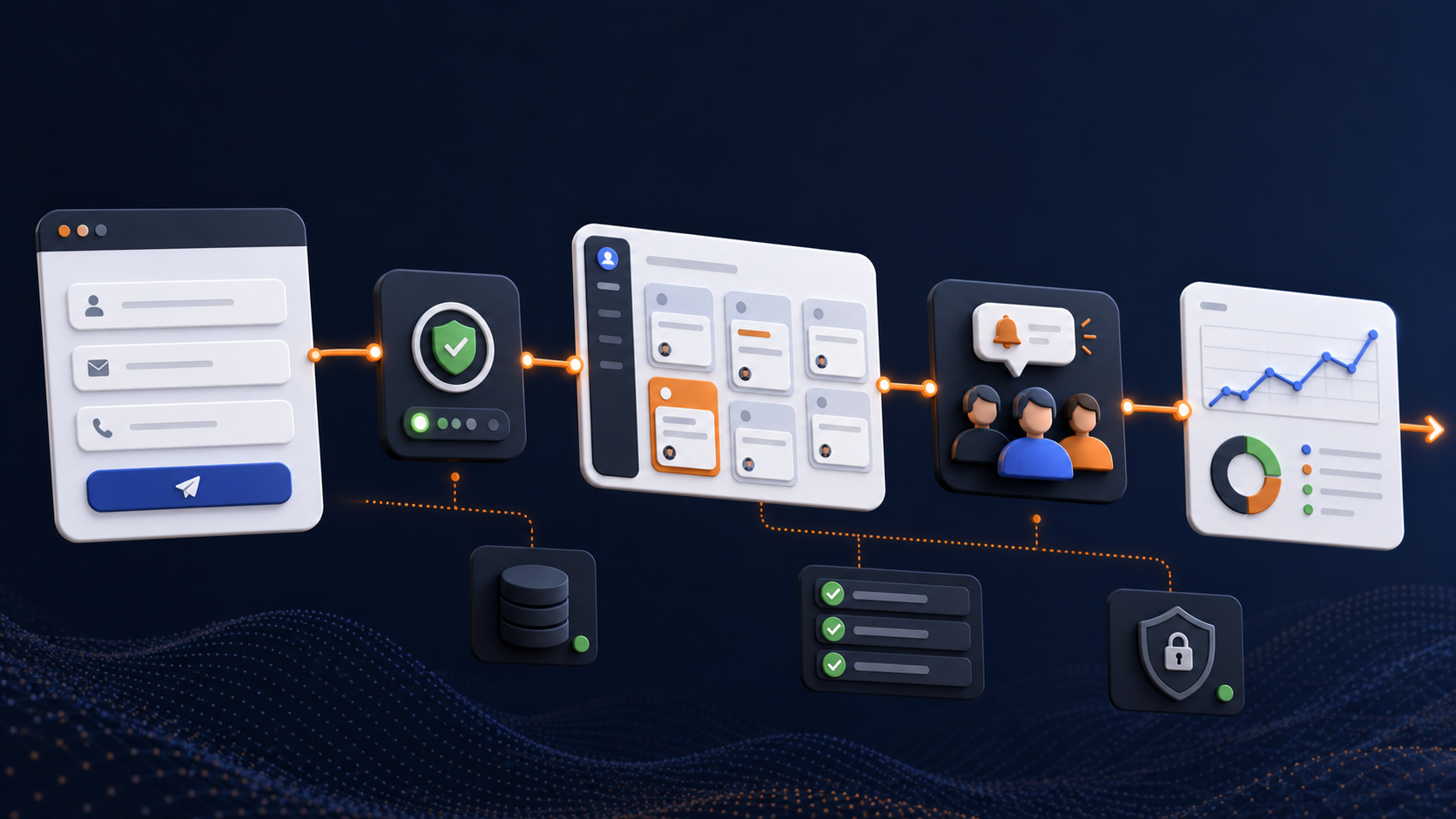
The start is ready when the team can answer simple questions in the same way: what is in the first release, what path the customer follows, where the request goes, and how success will be checked.
Good discovery does not slow the project down. It removes guesses and helps the team move faster.
How to find the real goal

At the beginning, the request often sounds broad: we need a modern website, more requests, or a stronger market image. That is a normal starting point, but it is not enough for production. The team needs to turn the wish into a clear goal: who should come, what they should understand, and which action matters most.
A good goal does not need to be complex. It needs to help the team make decisions. If the main result is B2B requests, the structure, copy, and forms will be one way. If the goal is to explain a new product to partners or investors, the focus will be different. Discovery helps choose this direction before design starts.
When the goal is written in simple words, there are fewer taste-based arguments. Instead of ?I like it? or ?I do not like it?, the team can ask: does this help the right person take the right action?
- Define who the project is for
- Name the main user action
- Agree what a successful launch means
What belongs in the first release

A common reason projects drag on is the attempt to include every idea in the first release. The team discusses secondary pages while the important parts wait. A first release should be complete enough to be useful, but compact enough to launch quickly.
We split tasks into three groups: required for launch, useful after launch, and not needed now. This does not reject good ideas. It simply puts them in the right order. Users get a clear product earlier, and the business starts collecting real data sooner.
This matters even more when a website includes forms, integrations, catalog sections, articles, or accounts. The more parts there are, the more important it is to agree on the first step.
Customer path without guessing

A customer journey map shows how a person reaches the site, what they see first, where they hesitate, and when they are ready to send a request. It is not a complex diagram for its own sake. It is a way to see the project through the visitor?s eyes.
A person may come from search, ads, a recommendation, or a direct link. Each entry point has a different level of trust and a different question. One visitor needs price clarity, another needs proof of experience, and another needs technical details. If this is ignored, the site may look good but still fail to help people choose.
When the path is clear, it becomes easier to place blocks, write copy, and decide where forms, proof, cases, answers, and contacts are needed.
What the team gets after discovery

A good discovery result is not a heavy document that nobody reads. The team needs a clear set of decisions: project goal, audience, first release, page structure, important limits, integrations, and readiness criteria.
This helps the designer avoid inventing the meaning again, helps the developer understand the future logic, and helps the client see why decisions are made. It reduces rework and makes the project calmer.
Discovery does not replace design or development. It creates the base that makes those stages faster and more precise. The clearer the start, the fewer random decisions appear later.